


 Back to journal

A year ago, during a usual (not sure they’re ever usual) digging trip in Jura, we found a massive stock of unfinished fronts in a box stamped with the numbers ‘468’ and the name ‘Colbert’.
We took them back to Brussels, laid them on our basement floor, with the whole team’s heads pointed downwards, faces lit up like pirates around a chest of gold. If you’ve been in the digging game for long enough, you’ll know it’s quite unusual to find such a quality batch. In terms of colours, shape, thickness (8mm), the variety of sizes available and the fact that they’d been left in their original mid-manufacturing state, laced by a cord in batches of the ‘good old’ unit of measurement – meaning 12×12, also known as ‘la grosse’. We had also previously acquired temples from J-P Coffignon (Paris, 70s) for our other FRONTs, which happen to perfectly fit for the demi-amber col.052 and demi-blond col.053.
After a little more research, we found that these were designed by Pierre Marly, an emblematic figure in the Parisian luxury eyewear world of the time – his boutique is still located at the same spot, at Rue François 1er in Paris.

The 468 was originally named ‘Colbert’, made in tortoiseshell exclusively for Valéry Giscard d’Estaing, who was the French president between 1974 and 1981 – a politically contentious figure, to put it mildly. The number ‘468’ was most likely and simply the serial number of reference for the manufacturers. In case you’re wondering: no, we have no intention of paying tribute to him by releasing this frame, which is also why we named it ‘468’ and not ‘Colbert’. Marly’s designs were already well known in French celebrity circles, but the ‘Colbert’ pushed his fame forward considerably. He then went on to design the ‘Sophia Sport’ for Michel Polnareff and the ‘Sport-M’ for Serge Gainsbourg. These models spread quickly, thanks to the ‘influencers’ of the time, and were then produced in the Jura with Fidela. Which explains the consequent production of the ‘Colbert’, though whether it was ever actually released to the public remains unclear. The box we found may simply be the remnants of what could have been.

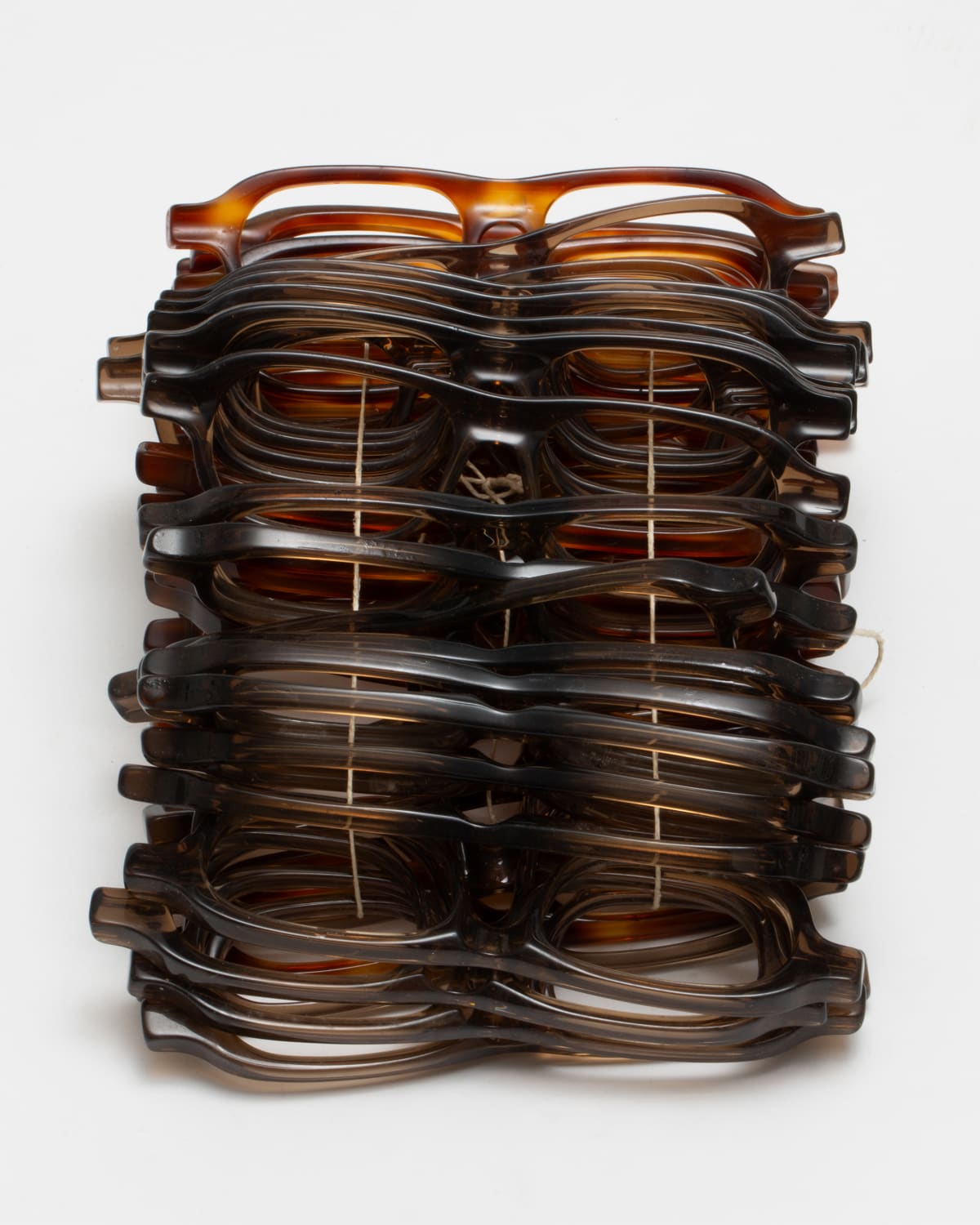


If you’ve been around long enough, you’ve surely heard of our FRONTs project, in which we rescue -all by hand- unfinished, raw front pieces left mid-manufacturing process and finish them in our atelier in Brussels. Mathias, our chef d’atelier, did some prototyping with the pieces which then allowed us to define the missing pieces, the right techniques to use for the frame and find a manufacturer/atelier capable of finishing the job for us. Our whole world has been built around the discarded/found stocks from factories that have been shut down or disappeared for decades. This time, we had a stock of fronts that was large enough to collaborate with small manufacturers in the Jura, who have navigated these periods and movements which have fascinated us for so long – a full circle moment.
We went back to the source in Oyonnax (FR) multiple times, trying to piece together the rest of this glasses puzzle. After more basements, factories and opticians, we found all the missing pieces we needed. The frames were made largely by hand, with some of the oldest machines still operating today, by a two-generation family workshop in Oyonnax, a place we find quite as remarkable as the frames themselves.
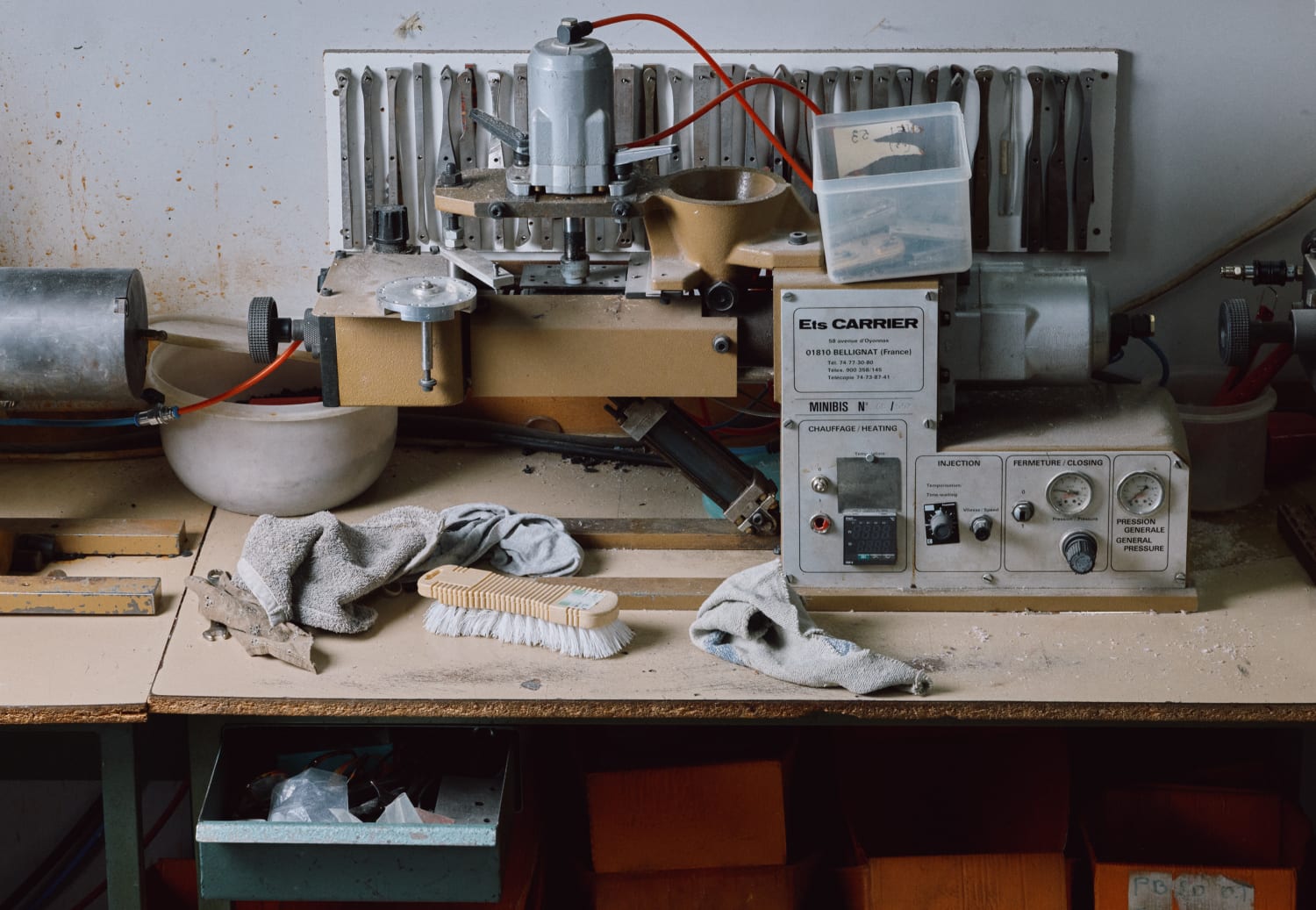
Despite being newly made, the mod.468 stems from the same philosophy as everything else at Bidules; bringing deadstock back to life. All final components were sourced and matched from the 1970s, featuring a strong straight-brow front, temples with original wire core, and period hinges. Below is a list of the final components for the first batch, which is always dependent on what is available when we go digging, and which is always dependent to change with the next one(s).


FRONTS – The fronts were manufactured by Fidela (Les Fils d’Aimé L’Amy – Morez, FR). Made from 8mm (80/10) acetate slabs, we found them unfinished and raw, left mid-manufacturing process. Only the first pass and some structural details had been done. Based on the material, colours and shapes, we estimate them to date back to the 1970s.
TEMPLES – We found matching deadstock raw temples for the col.052 (demi-amber) and col.053 (demi-blond). Other colours were produced from deadstock acetate slabs, with embossed deadstock 4mm monel wirecore from Carrier (Bellignat, FR).
HINGES – The fronts were assembled with 53-6° hinges from Société Veuve Henri Chevassus (Morez, FR), and the temples with mod.521 00 03 from Comotec (Morez, FR).
SCREWS – The final hero holding it all together: a 2.8×61 screw, from Morez (FR).


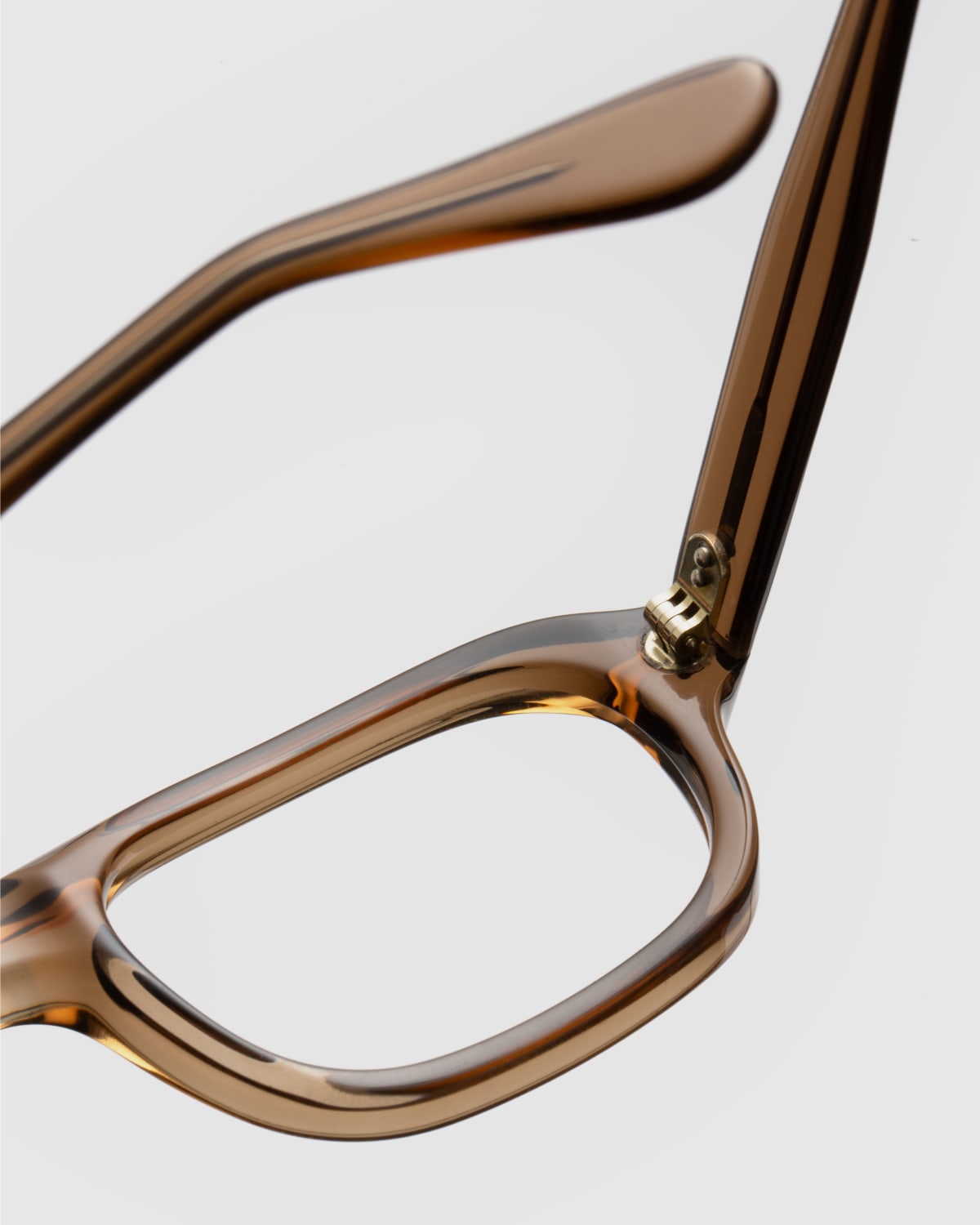
We called up our longtime friends at Focus Focus in Marseille, shared our newfound treasure and asked if they’d be up for an adventure in newly manufactured deadstock frames. The collaboration resulted in the col.001 and col.053, as well as sea-side-ready custom half-tone lenses Zeiss.
The entirety of the mod.468 collection was then presented during a month-long temporary showroom in Marseille, from the 4th to the 26th of September. The 468 frames were shown alongside the work of Arnaud Eubelen and Melissa Mariller, and Mathilde Hiley and over 200 deadstock frames brought from our store in Brussels.
It’s always hard to predict what a digging trip will unearth. This particular box of unfinished fronts brought us a little more than usual, and we’re glad it did.
You can find the mod.468 as optical and sunglasses, in a combination of 9 colours and sizes, both in Marseille, at Focus Focus and our shop in Brussels. Stay tuned for more stockists.


